Many salons, distributors, and private label hair brands struggle to judge hair extension quality before placing bulk orders. Product photos may look smooth and shiny, but the real quality depends on sourcing, cuticle alignment, processing, bonding, wefting, and inspection. If you are asking how are human hair extensions made, this guide will help you understand what happens inside a professional hair extension factory. By learning the full production process, you can choose better human hair extensions, reduce customer complaints, and build a more reliable hair extension line.
Table of Contents
What Are Human Hair Extensions?
Human hair extensions are hairpieces made from real human hair and designed to add length, volume, color, or texture to natural hair. Compared with synthetic hair, human hair extensions offer a more natural look and can usually be washed, curled, straightened, and styled more flexibly.
For B2B buyers, human hair extensions are not only beauty products. They are also inventory products that need stable quality, consistent color, repeatable specifications, and reliable packaging.
Common types of human hair extensions include:
| Hair Extension Type | Main Feature | Common Buyer Type |
|---|---|---|
| U-tip hair extensions | Keratin bond for heat fusion installation | Professional salons |
| I-tip hair extensions | Strand-by-strand installation without heat | Salons and stylists |
| Micro ring loop extensions | Loop and ring system for easier installation | Salon supply businesses |
| Hand tied weft extensions | Thin, flexible, lightweight weft | Premium hair brands |
| Machine weft extensions | Durable stitched weft | Wholesale distributors |
| Clip-in hair extensions | Easy temporary use | Retail and e-commerce brands |
| Nano ring extensions | Smaller attachment point | Salons needing discreet installation |
| Flat tip extensions | Flat bond structure | Professional stylists |
Understanding these product types helps buyers choose the right structure for salon services, retail packaging, wholesale distribution, or private label development.
How Are Human Hair Extensions Made in a Factory?
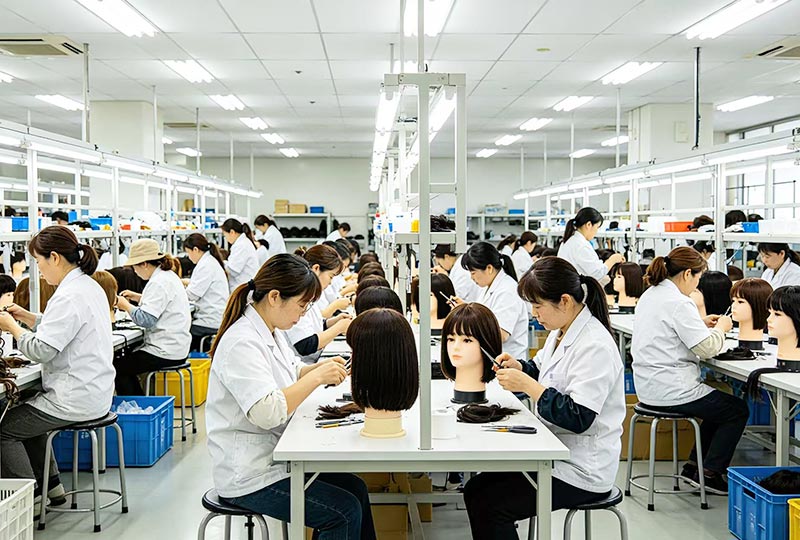
The manufacturing process usually includes raw hair sourcing, sorting, cleaning, cuticle alignment, color processing, texture setting, bonding or wefting, quality inspection, and packaging. Each stage affects the final product’s softness, durability, shedding resistance, tangling performance, and appearance.
A professional factory does not simply collect hair and sew it into wefts. The process requires careful material control, skilled handwork, and repeatable quality standards.
If your brand needs specific length, color, curl pattern, weight, or packaging, professional custom hair extensions manufacturing can help turn a standard product into a more market-ready private label line.
Main Steps in Human Hair Extension Production
The basic process includes:
- Raw human hair sourcing
- Sorting by length, texture, color, and quality
- Cleaning and sanitizing
- Cuticle direction control
- Drawing for thickness and fullness
- Bleaching, dyeing, or tone matching
- Texture setting for straight, wavy, or curly styles
- Making tips, wefts, clips, or other structures
- Final quality inspection
- Private label or wholesale packaging
For buyers, understanding these steps makes it easier to compare suppliers and avoid low-quality extensions that only look good before washing.
Raw Human Hair Sourcing for Hair Extensions
Raw material is the foundation of hair extension quality. Even the best production process cannot fully fix weak, overly dry, or poorly mixed hair.
Factories usually source human hair according to length, color level, texture, health, and fiber condition. Higher-quality raw hair is easier to process, feels smoother after washing, and performs better during styling.
Why Hair Sourcing Matters for Wholesale Buyers
For wholesale buyers and hair brands, sourcing stability is extremely important. A single good sample does not mean every bulk order will match the same standard.
When evaluating a supplier, buyers should ask:
- What grade of human hair is used?
- Is the hair Remy or cuticle-aligned?
- Can the same quality be repeated in future orders?
- Are different grades separated clearly?
- Can the supplier support custom lengths and textures?
- Can the factory provide samples before bulk production?
If the sourcing is unstable, the final products may vary in softness, color, thickness, and lifespan from batch to batch. For private label hair brands, this can lead to inconsistent customer reviews and lower repeat purchase rates.
Sorting Human Hair by Length, Color, and Texture
After sourcing, the hair is sorted before production. Sorting helps remove unsuitable strands and create consistency across the final products.
Hair is usually sorted by length, natural color level, texture, thickness, and fiber condition. For high-quality Remy hair extensions, direction control is also important because the hair should be aligned from root to tip.
Common Human Hair Sorting Standards
Length sorting ensures that a 20-inch product actually meets the expected length range. Texture sorting keeps straight, body wave, deep wave, and curly products visually consistent. Color sorting helps the factory achieve more accurate dyeing and tone matching.
Poor sorting can cause several problems:
- Thin or uneven ends
- Mixed textures in the same bundle
- Inconsistent color results
- More tangling after washing
- Lower product value in the customer’s eyes
For private label hair brands, sorting quality affects product reviews, customer satisfaction, and repeat purchases.
Cleaning and Sanitizing Human Hair Extensions
Before hair can be processed into extensions, it must be cleaned. Raw hair may contain natural oils, dust, loose particles, or residue from handling. Cleaning prepares the hair for coloring, conditioning, and assembly.
A good cleaning process should remove impurities without damaging the hair fiber. Overly harsh washing can make the hair dry, weak, or rough. Professional factories control washing time, water temperature, rinsing, and drying to protect the hair’s natural feel.
How Cleaning Affects Hair Extension Quality
Cleaning has a direct impact on the final product. If the hair is not cleaned properly, it may have odor, uneven dye absorption, or poor texture stability. If it is over-cleaned or chemically damaged, it may feel smooth at first but become dry after several washes.
Buyers should test samples by washing and air drying them before confirming bulk orders. This gives a more realistic view of how the hair will perform for customers.
Cuticle-Aligned Human Hair Extensions
Cuticle alignment is one of the most important quality factors in human hair extensions. Human hair has an outer cuticle layer, and when strands are aligned in the same direction, the surface feels smoother and tangles less easily.
To understand why processing control matters, it helps to know the basic structure of human hair, including the cuticle and cortex layers that influence strength, smoothness, and appearance.
This is why many buyers prefer Remy hair extensions. Remy hair means the strands are kept in the same root-to-tip direction as much as possible.
Why Cuticle Direction Reduces Tangling
When hair cuticles face opposite directions, they rub against each other. This friction can cause matting, roughness, and tangling, especially after washing or daily wear.
The hair shaft structure explains why cuticle direction, fiber condition, and cortex quality can affect the way extensions feel after washing and styling.
Cuticle-aligned hair extensions usually offer:
- Smoother combing
- Better movement
- Less friction
- More natural blending
- Better long-term performance
For salons, this helps protect service reputation. For distributors and hair brands, it reduces customer complaints and returns.
Single Drawn and Double Drawn Hair Extensions
The drawing process controls the thickness and fullness of the finished hair extensions. This is where buyers often see terms such as single drawn and double drawn.
Single drawn hair contains a natural mix of strand lengths, so the ends look softer and more natural. Double drawn hair is sorted more carefully to remove shorter strands, creating fuller ends from top to bottom.
Single Drawn vs Double Drawn Hair Extensions
| Type | Appearance | Best For |
| Single drawn hair | Natural taper with softer ends | Natural daily looks and cost-sensitive product lines |
| Double drawn hair | Fuller ends and thicker appearance | Premium salons, luxury hair brands, photo-focused products |
Neither option is automatically better for every buyer. The right choice depends on brand positioning, customer expectations, and target market.
For premium private-label lines, double-drawn hair is often preferred because it looks fuller in photos and feels more luxurious. For natural salon looks, single drawn hair may blend better with the client’s own hair.
Coloring Human Hair Extensions
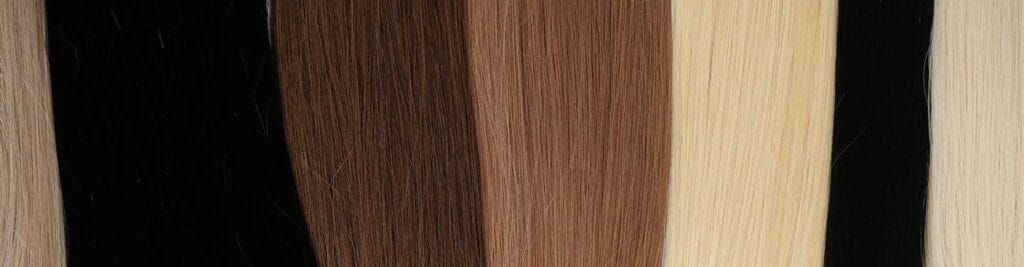
Color processing is one of the most technical parts of human hair extension manufacturing. Natural human hair comes in different shades, so factories must bleach, dye, tone, rinse, and dry the hair carefully to achieve consistent colors.
Common colors include natural black, dark brown, medium brown, light brown, blonde shades, ombre, balayage, highlights, and custom colors.
Because color processing affects both appearance and fiber condition, buyers can also review the FDA information on hair dyes to better understand why dyeing and ingredient control matter in beauty products.
Why Color Consistency Matters for Hair Brands
Color consistency is critical for salons and e-commerce sellers. A customer may reorder the same shade months later and expect it to match the previous purchase. If the color varies too much between batches, the buyer may receive complaints even if the hair quality is good.
Light colors require more processing than dark colors, so factories must balance color accuracy with hair protection. Over-bleached hair may become dry, weak, or difficult to maintain.
Professional suppliers should be able to provide:
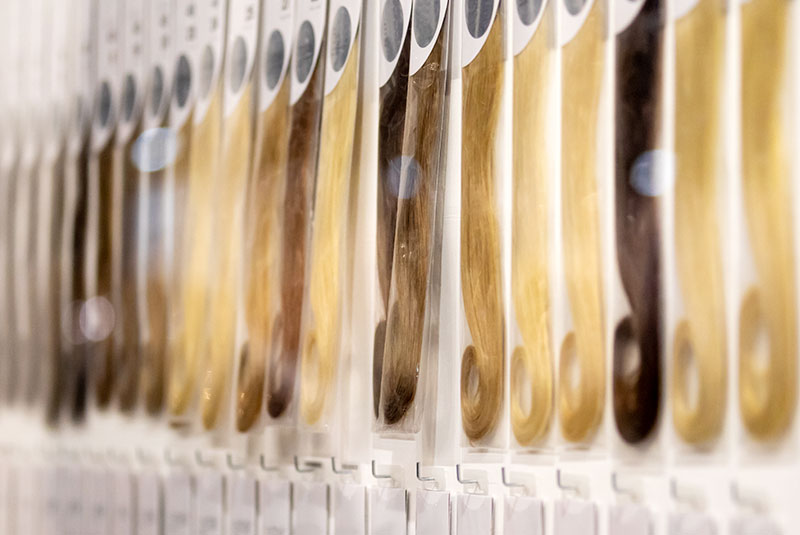
- Color rings
- Color samples
- Custom color matching
- Batch consistency control
- Pre-production sample confirmation
For private label brands, custom colors can also help create product differentiation.

Texture Setting for Wavy and Curly Hair Extensions
Texture setting creates or stabilizes straight, body wave, loose wave, deep wave, water wave, curly, or kinky curly patterns. This step requires controlled heat, moisture, shaping, and finishing.
The goal is not only to make the hair look attractive in packaging. The texture should also remain wearable after washing and daily styling.
What Buyers Should Check in Curly Hair Extensions
Curly and wavy human hair extensions need careful testing. Buyers should check whether the curl pattern remains consistent after washing, whether the hair becomes too dry, and whether the texture still blends naturally.
Important sample checks include:
- Wash and air dry the sample
- Check curl recovery
- Comb gently from ends to roots
- Test for frizz and shedding
- Compare texture between bundles
- Check whether the curl pattern matches product photos
For salons and distributors, stable texture is important because customers often choose curly hair based on visual expectations.
Making U-Tip Hair Extensions
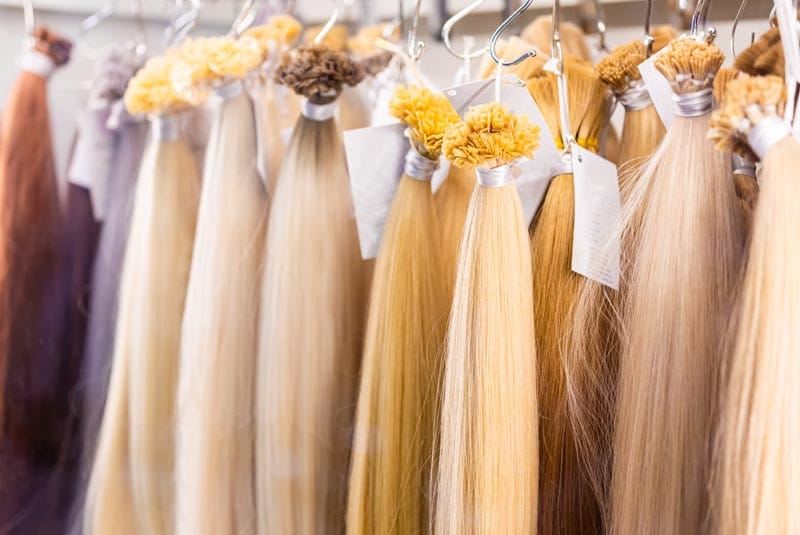
U-tip hair extensions are made by bonding individual hair strands with a U-shaped keratin tip. They are usually installed by professional stylists using heat fusion.
For heat fusion salon services, U-tip hair extensions are made with keratin bond tips that allow stylists to apply the hair strand by strand for a natural-looking result.
During production, the factory must control the strand weight, keratin amount, tip shape, and bond strength. A good U-tip should be neat, secure, and easy for stylists to install.
Key Quality Points for U-Tip Extensions
Buyers should check:
- Whether the keratin tip is clean and uniform
- Whether each strand has consistent weight
- Whether the bond is firm but not bulky
- Whether the hair flows naturally from the tip
- Whether the color and length match the order
For professional salons, stable U-tip quality helps reduce installation problems and improves the final blending effect.
Making I-Tip and Micro Ring Hair Extensions
I-tip hair extensions are made with a compact tip that can be installed using beads or rings, usually without heat or glue. Micro ring loop hair extensions include a loop system that helps simplify installation.
For no-heat installation methods, I-tip hair extensions and micro ring loop hair extensions are practical options for salons that prefer bead or ring application.
These products require stable tip shaping and consistent strand weight. If the tip is too weak, it may break during installation. If it is too bulky, it may feel uncomfortable for the client.
Why No-Heat Hair Extensions Are Popular
No-heat installation methods are popular with many salons because they reduce the need for hot tools during application. They also allow flexible placement and movement.
For buyers, key inspection points include:
- Tip firmness
- Strand weight consistency
- Ring compatibility
- Smooth hair flow
- Low shedding
- Easy installation handling
For salon supply businesses, I-tip and micro ring loop extensions can help cover customers who prefer flexible, reusable, and less heat-intensive application methods.
Making Hand Tied Weft Hair Extensions
Hand tied weft extensions are made by tying hair into a thin and flexible weft structure. This process requires skilled handwork and careful tension control.
For buyers focused on a thin, flexible, and premium weft structure, hand tied weft hair extensions can be positioned as a higher-end choice for professional salon use.
The main advantage of hand tied wefts is that they lay flatter and feel lighter than many traditional wefts. This makes them popular for premium salon applications.
What Makes a Good Hand Tied Weft
A good hand tied weft should be thin, neat, flexible, and comfortable. It should not shed excessively or feel bulky near the scalp.
Buyers should check:
- Weft thickness
- Stitching neatness
- Hair density
- Shedding performance
- Flexibility
- End fullness
- Color consistency
For brands selling premium salon extensions, hand tied weft quality can become an important selling point.
Making Flat Tip and Nano Ring Hair Extensions
A complete salon or private label product line can also include flat tip hair extensions and nano ring hair extensions to meet different installation preferences.
Flat tip hair extensions have a flatter bond structure, which helps create a more comfortable installation feel for certain clients. Nano ring extensions use smaller attachment points, making them suitable for buyers who want a more discreet application method.
Why Product Structure Matters for Hair Brands
Different installation methods serve different customers. Some salons prefer keratin fusion. Others prefer bead application, wefts, or temporary clip-in solutions. For distributors and private label brands, offering several extension structures can help serve more market segments.
When developing a product line, buyers should consider:
- Target salon installation method
- Customer hair type
- Preferred maintenance cycle
- Desired comfort level
- Product positioning
- Packaging and SKU planning
A supplier with multiple extension structures can help buyers create a more complete and flexible product catalog.
Quality Control for Human Hair Extensions
Quality control should happen throughout the full production process, not only at the end. However, final inspection is still essential before packaging and shipment.
A factory should check length, weight, color, texture, shedding, tangling, bond strength, weft quality, and packaging accuracy.
When testing samples, buyers should wash, dry, and style the hair carefully. General dermatologist hair care tips can also help explain why gentle handling and heat control matter for long-term hair condition.
Hair Extension QC Checklist for Buyers
| QC Item | What to Check |
| Length | Whether the hair matches the ordered inch range |
| Weight | Whether each bundle, strand, or set meets the required grams |
| Color | Whether the shade matches the approved sample |
| Texture | Whether straight, wavy, or curly patterns are consistent |
| Shedding | Whether wefts or tips release too much hair |
| Tangling | Whether the hair stays smooth after combing and washing |
| Bond strength | Whether tips, tape, or stitching are stable |
| Packaging | Whether labels, SKUs, and product information are correct |
For wholesale buyers, QC standards should be confirmed before production. For private label brands, packaging inspection is just as important as hair inspection because wrong labels or mixed colors can cause fulfillment problems.
Private Label Packaging for Human Hair Extensions
After inspection, the hair extensions are packaged for wholesale, salon, or private label distribution. Packaging protects the hair and supports brand presentation.
Common packaging options include OPP bags, PVC bags, hanger cards, cardboard boxes, logo labels, barcode stickers, and custom inserts.
Why Packaging Matters for Hair Extension Brands
Packaging affects both customer experience and operational efficiency. E-commerce sellers need clean, attractive packaging for product presentation. Salons need packaging that makes inventory management easy. Distributors need clear labels for color, length, texture, and SKU control.
Private label packaging can include:
- Custom logo
- Custom color card
- Custom product label
- Custom box or bag
- Barcode or SKU sticker
- Length and color information
- Brand instruction card
For buyers developing their own hair line, OEM/ODM packaging helps create a more professional and recognizable brand image.
How to Choose a Human Hair Extension Manufacturer
After understanding how are human hair extensions made, the next step is choosing the right supplier. A good manufacturer should offer stable raw material, clear production standards, flexible customization, and reliable quality control.
Questions to Ask Before Bulk Ordering
Before placing a wholesale order, ask the supplier:
- Can you provide samples before bulk production?
- What hair grades do you offer?
- Can you make custom colors and textures?
- What extension types can you produce?
- Can you support private label packaging?
- How do you control color consistency?
- How do you inspect shedding and tangling?
- Can you repeat the same quality in future orders?
A supplier that can answer these questions clearly is more likely to support long-term brand growth.
Common Problems in Poorly Made Hair Extensions
Poorly made hair extensions may look acceptable in photos but fail after real use. Buyers should be careful when evaluating samples and supplier claims.
Warning Signs of Low-Quality Hair Extensions
Common problems include:
- Tangling after washing
- Excessive shedding
- Thin or uneven ends
- Weak keratin tips
- Bulky wefts
- Uneven color
- Dry or rough texture
- Curl pattern loss
- Strong chemical odor
- Packaging mistakes
These issues can damage customer trust, increase returns, and make it harder for salons or brands to build repeat business.
Conclusion
Human hair extensions are made through a detailed process that includes sourcing, sorting, cleaning, cuticle alignment, coloring, texture setting, bonding, wefting, quality control, and packaging. Every step affects how the final product looks, feels, installs, and performs after washing and styling.
For salons, distributors, and private label hair brands, understanding how human hair extensions are made helps you choose better products and avoid common sourcing problems. Instead of judging only by product photos, buyers should test samples, check hair performance after washing, and confirm production standards before bulk orders.
If you are developing a wholesale hair extension line or private label collection, you can contact Ulian Hair with your required length, color, texture, attachment type, packaging, and target market. You are also welcome to share your questions about hair extension sourcing, customization, or quality control, and our team can help you find a suitable solution for your market.
FAQ
How are human hair extensions made?
Human hair extensions are made by sourcing real human hair, sorting it by length and quality, cleaning it, aligning the strands, coloring or texturizing it, making it into wefts or tip extensions, inspecting it, and packaging it for sale.
What is the most important step in making human hair extensions?
Raw hair sourcing and cuticle alignment are two of the most important steps. They strongly affect softness, tangling, shedding, and long-term product performance.
Are Remy hair extensions better for salons?
Remy hair extensions are often preferred by salons because the hair strands are aligned in the same direction, which helps reduce tangling and creates a smoother feel.
Why do some human hair extensions shed?
Shedding can happen because of weak weft stitching, poor bonding, rough handling, or low-quality manufacturing. Buyers should test samples before placing bulk orders.
Can human hair extensions be customized?
Yes. Human hair extensions can be customized by length, color, texture, weight, attachment type, packaging, and private label branding.
What should I check before buying wholesale hair extensions?
You should check softness after washing, shedding, tangling, color consistency, end thickness, strand weight, weft or bond strength, and packaging accuracy.